
Every Connecticut winter follows a familiar pattern. Snow piles up on the roof, the sun comes out for a day or two, and then temperatures drop again overnight. By February, icicles hang from the gutters, and a damp spot starts showing up on the ceiling near an outside wall.
For many Connecticut homeowners, the first fix that comes to mind is roof heating cables, these electric cables are designed to keep ice from building up along the edge of your roof.
But are they the right choice for your home? In this guide, we explain what roof heat cables are, how they work, their pros and cons, and whether they are worth it for homes in Connecticut.
What Are Roof Heating Cables?
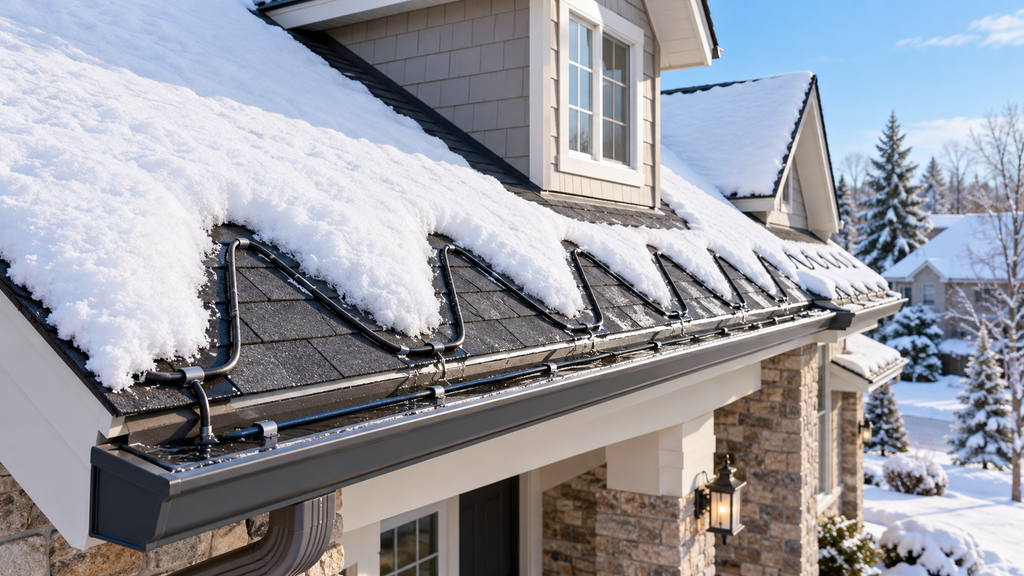
Roof heating cables are electric heating wires installed along the edge of a roof, inside gutters, and down through downspouts. When switched on, they warm the surrounding area just enough to melt snow and ice and keep meltwater moving off the roof.
Constant-Wattage vs. Self-Regulating Cables
There are two main types of roof heat cables:
- Constant-wattage cables put out the same amount of heat at all times. They cost less upfront but use more electricity, so they work best with a timer or thermostat.
- Self-regulating cables adjust their heat output based on the outside temperature. They use less energy and last longer, but they cost more to buy and install.
For most Connecticut homes, self-regulating cables are the better long-term investment, especially if they will run often during the winter.
How Roof Heating Cables Work
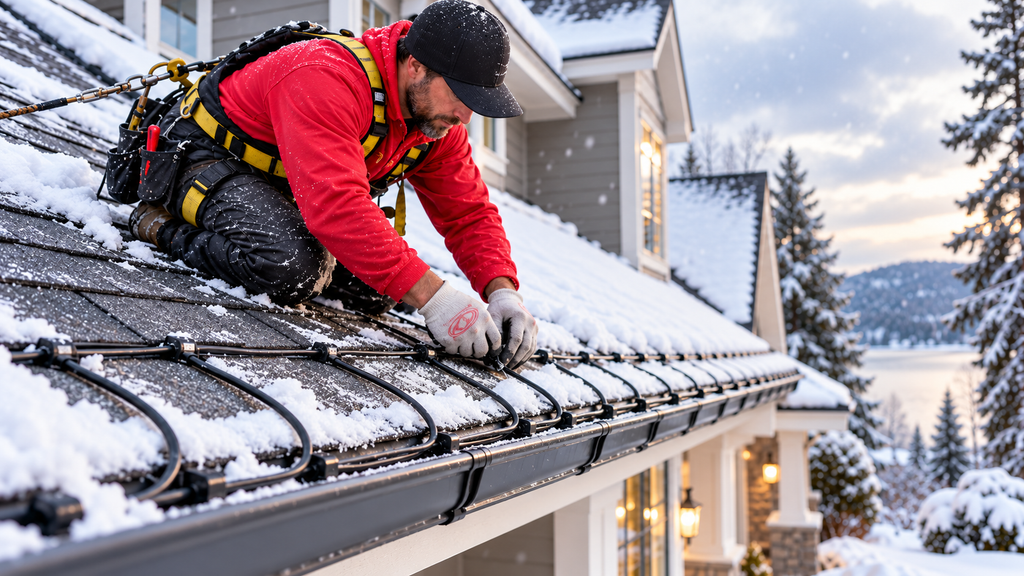
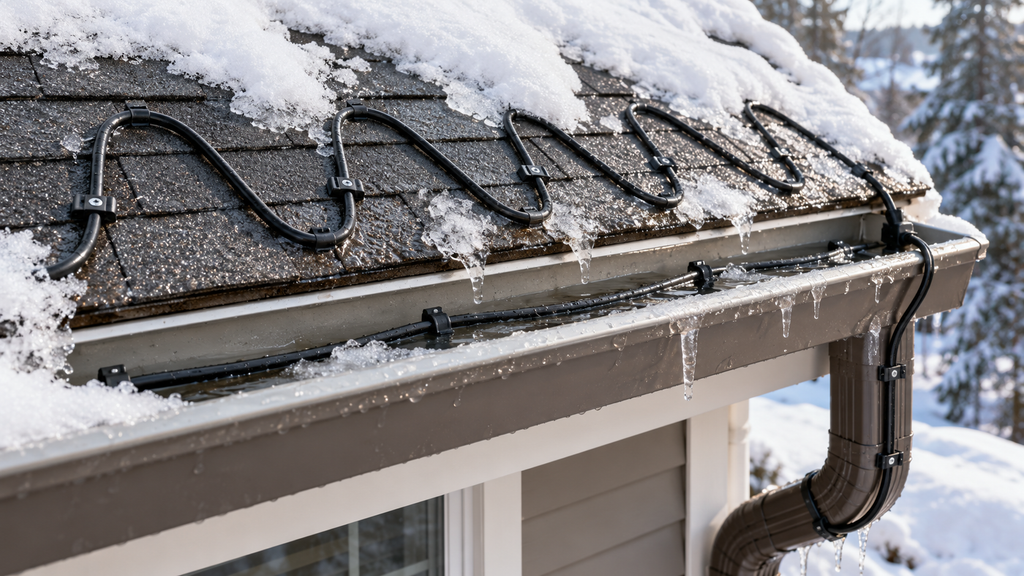
Roof heating cables are usually installed in a zig-zag pattern along the lower edge of the roof, right above the eaves where ice dams form. Additional runs go inside the gutters and down the downspouts so that water has a clear path all the way to the ground.
It is important to understand what they do not do. Roof heat cables do not melt all the snow on your roof. Instead, they create open channels through the ice so that meltwater can drain rather than back up under your shingles.
Most systems can be controlled in one of four ways:
- A manual on/off switch
- A timer
- A thermostat that turns the cables on below a set temperature
- A snow and moisture sensor that runs the system only when it is needed
Automatic controls are well worth the extra cost. They keep the cables working when you need them and off when you don’t, which keeps your electric bill in check.
Why Ice Dams Are a Big Problem in Connecticut
Ice dams start inside your home. Warm air escapes into the attic and heats the upper part of the roof, melting the snow. That meltwater runs down to the colder edge of the roof and refreezes. Over time, a ridge of ice builds up and traps water behind it, forcing it under the shingles.
Connecticut homes face a higher risk for a few reasons:
- Frequent freeze-thaw cycles keep the melt-and-refreeze process going all winter
- Older homes, especially Colonials and Cape Cods, often have limited attic insulation and ventilation
- Steady snowfall gives ice dams plenty of material to work with
The damage can be serious. Water under the shingles leads to ceiling stains, mold in the attic, rotted roof decking, and gutters pulled loose from the house. That is why ice dam prevention is something every Connecticut homeowner should plan for before winter arrives.
Pros of Roof Heating Cables
Effective Ice Dam Prevention
When installed correctly, roof heat cables stop ice from blocking the roof edge. Meltwater keeps draining, so it never has a chance to back up under your shingles.
Protects Your Roof, Gutters and Interior
By preventing ice dams, roof heat cables help protect your shingles, decking, gutters, ceilings, and walls from water damage. Avoiding just one major leak can offset much of the system’s cost.
Targeted Solution for Problem Areas
Some parts of a roof are more prone to ice dams than others. Valleys, low-slope overhangs, north-facing eaves, and areas around skylights often stay colder and collect more ice. Cables can be placed exactly where you need them.
A Practical Fix for Older Connecticut Homes
In some older homes, adding insulation or improving ventilation can be difficult or expensive because of how the attic was built. Roof deicing cables offer a practical way to manage ice dams when other fixes are not realistic.
Keeps Gutters and Downspouts Flowing
Frozen gutters and downspouts force water back onto the roof. Running heat cables through them, or upgrading to heated gutters, keeps the entire drainage path open throughout the winter.
Reduces Dangerous Icicles
Large icicles can damage gutters and pose a real risk to anyone walking below. By keeping ice from forming at the roof edge, heat cables reduce icicle buildup over doorways, walkways, and driveways.
Cons of Roof Heating Cables
Higher Winter Electricity Bills
Snow melting wire uses electricity, and constant-wattage cables can add noticeably to your winter bills if they run around the clock. A thermostat or snow sensor helps keep usage under control.
They Don’t Fix the Root Cause
This is the most important drawback. Ice dams form because heat escapes from your living space into the attic. Roof heat cables manage the symptom, but they do not stop that heat loss. Without addressing insulation and ventilation, you will keep paying to melt ice that should not be forming in the first place.
Installation Risks
Poorly installed roof deicing cables can short out, overheat, or create a fire risk. Incorrect spacing also leaves gaps where ice can still build up. It should be installed by a qualified roofing contractor, with electrical connections handled by a licensed electrician.
Possible Roof Warranty Issues
Some shingle manufacturers discourage nailing or clipping anything into the roof surface. Before installing cables, check your roof warranty to make sure the installation will not affect your coverage.
Appearance
Zig-zag cables along the roof edge are visible from the street. For some homeowners, especially those with historic homes, this is a real concern.
Limited Lifespan and Maintenance
Ice, falling branches, debris, and animals can all damage cables over time. Inspect them every fall to make sure they are secure, undamaged, and working before the first snowfall.
Can You Install Heat Tape on Your Roof Yourself?
DIY kits for heat tape for roofs are widely available at home improvement stores, and some homeowners choose to install them on their own. However, there are real risks involved:
- Working on ladders and roof edges in cold weather
- Incorrect cable spacing that leaves ice to build up between loops
- Electrical connections that are unsafe or not up to code
- Damaging shingles with clips or nails
- Missing existing roof damage that should be repaired first
If you plan to install snow melting wire, do it before the first snowfall. In Connecticut, October and November are the ideal months. A professional installation also gives you the chance to have your roof inspected at the same time.
Schedule a free roof inspection with Xpert Roofing Pro Today!
Alternatives to Roof Heating Cables for Ice Dam Prevention
Roof heating cables work best as one part of a broader ice dam prevention plan. Other proven options include:
- Attic insulation and air sealing. Stopping warm air from reaching the attic addresses the actual cause of ice dams. ENERGY STAR’s attic air sealing guide explains how sealing and insulating the attic helps reduce ice dams.
- Better roof ventilation. Balanced soffit and ridge vents keep the roof surface cold and even.
- Ice and water shield. Installed under the shingles during a roof replacement, this membrane stops backed-up water from leaking through.
- Roof rakes. Pulling snow off the lower part of the roof after a storm prevents it from melting and refreezing.
- Heated gutters. These keep the drainage system clear without placing cables on the roof.
Are Roof Heating Cables Worth It for Connecticut Homes?
Roof heating cables are worth it if:
- You have ice dams in the same spots every winter
- You live in an older home that is hard to insulate or ventilate
- Your roof has valleys, skylights, or shaded eaves that collect ice
- You need protection while you plan for a future roof replacement
They are probably not necessary if:
- Your attic is well insulated and properly ventilated
- You have never had ice dam problems
The bottom line is that heat tape for roofs is a useful tool, but it works best as part of a complete ice dam prevention strategy. Fixing insulation and ventilation should come first, with heat cables added where problem areas remain.
Protect Your Connecticut Home Before Winter
Roof heating cables can be an effective way to prevent ice dams, but only when installed correctly and paired with proper attic insulation and ventilation. Getting the right plan in place before the snow arrives can save you from costly leaks, rot, and interior damage this winter.
The team at Xpert Roofing Pro can inspect your roof, identify the cause of your ice dams, and recommend the right combination of solutions for your home, from roof repair to gutter services. Contact us today to schedule your free roof inspection.