Roof Repair6 min
Roof Flashing Guide: The Small Detail That Decides Whether Your Roof Leaks
Learn how roof flashing prevents leaks, the main types and materials, and warning signs to watch for. Expert advice from Xpert Roofing Pro in Connecticut.
Xpert Roofing Pro
Roofing Team, Danbury CT
Industry estimates attribute the great majority of roof leaks to flashing details, with some placing the figure as high as 95 percent. For that reason, experienced inspectors examine these components before anything else.
Flashing receives little attention because it is concealed, modest in appearance, and seldom discussed until moisture damage becomes evident. This blog outlines its function, the locations where it is most critical, the common styles and materials, and the indicators that a property's flashing requires professional assessment.
What Is Roof Flashing and Why Does It Matter?
Roof flashing is thin metal, most often galvanized steel, that seals the seams of your roof and steers water off it. You will find it wherever the roof meets a vertical surface, where two roof planes join, and around anything that pokes through the roof.
These locations are vulnerable because shingles shed water effectively across open slopes but cannot seal a joint on their own. Flashing covers the gap and acts as a barrier, then sends water downhill and out of the roof system instead of into the framing below.
Placement and Installation
On a typical home, flashing sits underneath the shingles. A few inches of it still run up the adjoining wall or pipe, which is why you can often see it from the ground. It is installed together with the roof system, and a qualified contractor can add or upgrade it afterward.
Where Roof Flashing Leaks Start: 5 Common Problem Areas
Most roof flashing leaks start at a few transition points where water is most likely to get in. Here are the five most common places to check during a roof flashing inspection.
1. Roof-to-Wall Joints
Where a sloped roof meets a wall, water can slip behind failed roof flashing and run unseen inside the wall. By the time stains or mold show up, the damage is often extensive. Step flashing and counterflashing that are properly installed and sealed prevent this.
2. Roof Valleys
A valley is the V-shaped channel where two slopes meet, and it carries runoff from both. When valley flashing fails, water can get under the shingles and cause rot, mold, and interior leaks. Check valleys for rust, gaps, and debris buildup.
3. Chimney Flashing
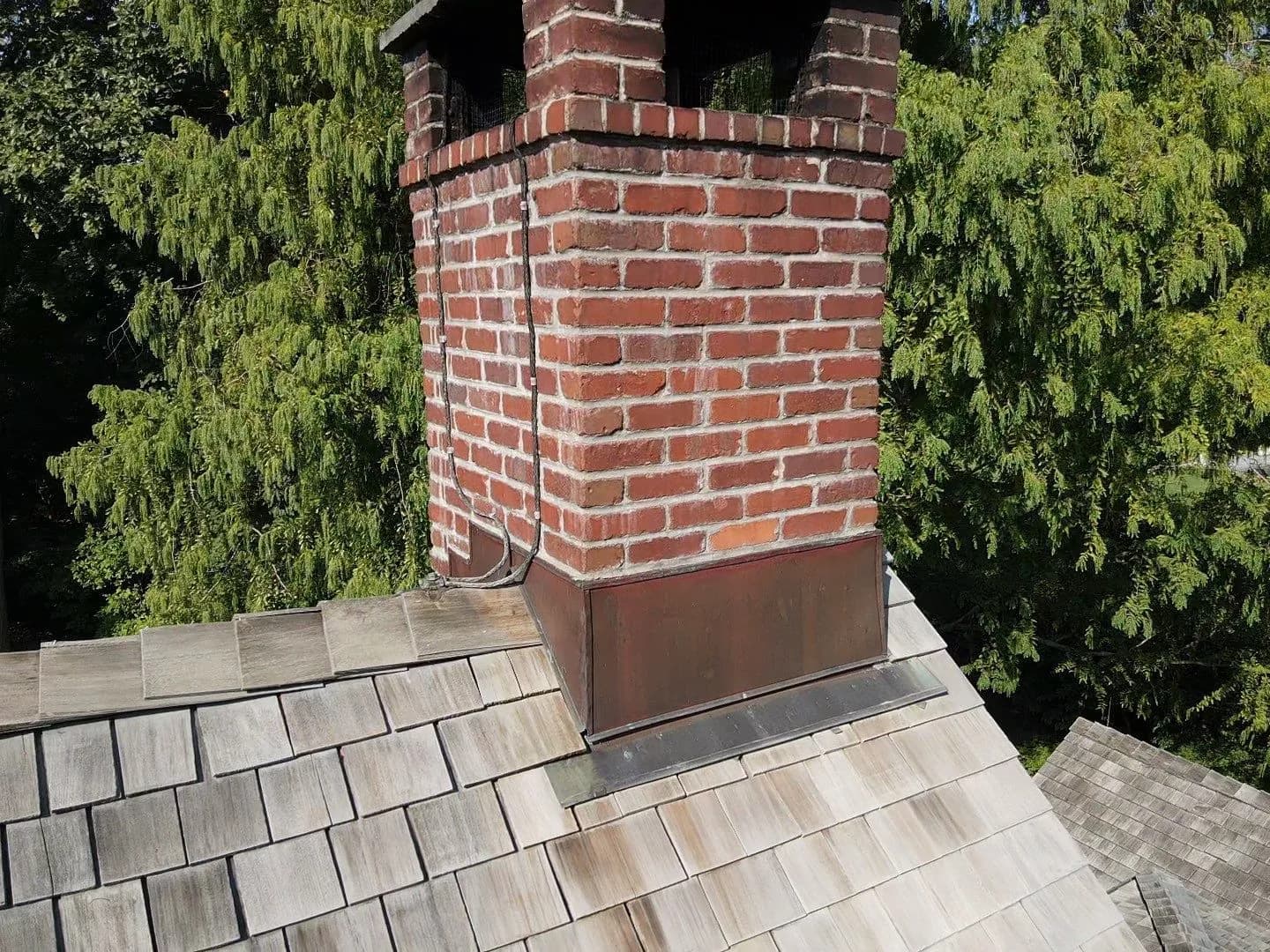
Chimneys are among the hardest details on any roof because they join masonry to the roof deck. Good chimney flashing has two parts:
- Base flashing fastened to the roof deck
- Counterflashing set into the masonry above it
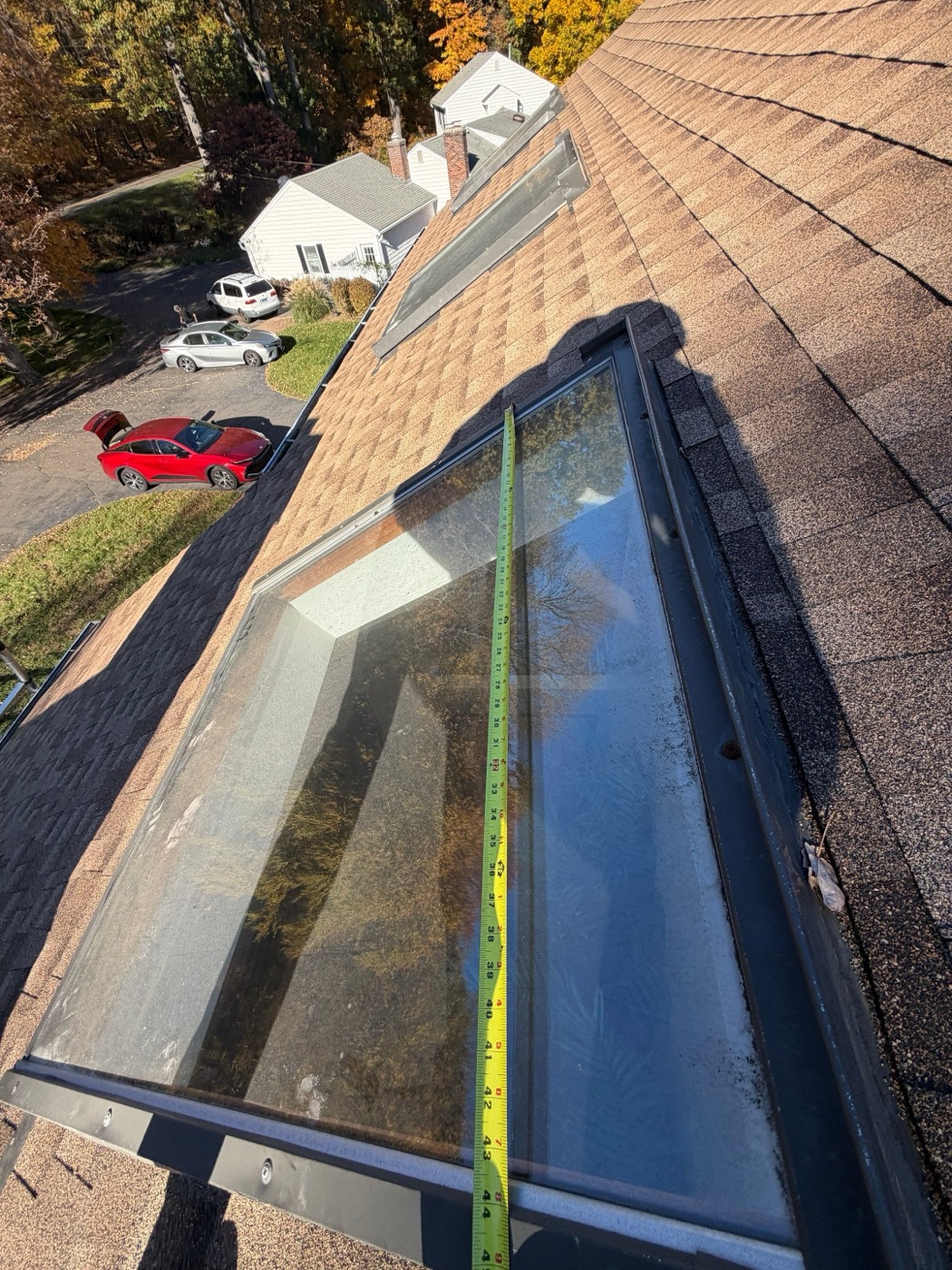
4. Vent Pipes and Skylights
Every roof penetration needs its own seal.
- Vent pipes: A rubber boot should fit snugly around the pipe and lie flat against the shingles. These boots crack with age, so they are a common source of leaks.
- Skylights: These need purpose-built flashing, whether they are curb-mounted or deck-mounted.
5. Eaves and Rakes
Along the roof’s outer edges, drip edges keep water from working under the shingles and damaging the roof deck and fascia
Main Types of Roof Flashing
Different roof details need different flashing. Here are the four main types, where each is used, and how to tell whether it was installed correctly.
Step Flashing
Step flashing protects roof-to-wall joints and the sides of chimneys. It is made of small L-shaped pieces woven in with each course of shingles in a stair-step pattern.
Valley Flashing
Valley flashing lines the valleys where two roof slopes meet. A center rib keeps fast-moving water from shooting across to the opposite slope. Valleys can be open (metal visible) or closed (covered by shingles).
Base and Counter Flashing
Chimney flashing works as a two-part pair. The base (apron) piece sits against the chimney at the roofline, and the counter flashing laps over its top. This design lets each part shift with temperature changes without opening a gap.
Drip Edge
Drip edge runs along the eaves and rakes. It directs water into the gutter instead of letting it run behind it, and it helps resist wind uplift at the roof edge.
How to Choose Roof Flashing Material
Most roof flashing today is metal. Galvanized steel is the everyday standard, and copper sits at the premium end. The figures below are typical industry ranges, not quotes. Real prices shift with gauge, quantity, and roof complexity.
Roof Flashing Materials Compared
| Material | Typical Lifespan | Typical Cost per Linear Foot | Best For |
|---|---|---|---|
| Aluminum | 20–30 years | Slightly below steel | Coastal homes with salty air |
| Galvanized steel | 20–30 years | 1.00–1.50 | Most asphalt shingle roofs |
| Copper | 80–100 years | 10–30 | Chimneys and high-end, custom work |
| Stainless steel | Long, similar to copper | Higher than steel, especially thick or custom pieces | Demanding environments |
Many building codes call for corrosion-resistant flashing of at least 26-gauge galvanized steel at chimneys, valleys, rakes, and roof-to-wall joints. Requirements vary by town, so always confirm your local code before choosing a material.
Signs Your Roof Flashing Needs Attention
Roof flashing is durable, but it can loosen, crack, or corrode over time. An annual check will catch most problems early, and you can do it safely from the attic and the ground.
Inside Your Home
Start indoors, since water damage often shows up here first.
- Water stains: Look for stains on ceilings or in the attic.
- Drips or dampness: Check the underside of the roof deck and the area around the chimney in the attic.
- Daylight around pipes or vents: Light showing around pipes or vents in the attic means the seal has failed.
- Leaks in the garage or porch: Water in these areas can also trace back to flashing.
From the Yard
After checking inside, move outside. Use binoculars to look at the roof from the ground.
- Shingle damage: Look for loose, damaged, or missing shingles.
- Flashing damage: Look for loose, damaged, or missing flashing.
Schedule a Roof Flashing Inspection in Connecticut & New York
Flashing is a small part of your roof with a big job. Some flashing materials outlast the shingles around them, but even durable flashing needs checking. Add an annual roof and flashing inspection to your home maintenance routine. When it is time for a new roof, replace the flashing at the same time so the whole system ages together.
Xpert Roofing Pro is a family-operated roofing company with more than 17 years of experience serving all eight Connecticut counties. Our work comes with a 10-year workmanship warranty and a 50-year GAF manufacturer warranty.
Have you noticed a ceiling stain or damaged flashing? Would you like a professional assessment? Call (475) 750-0330 to schedule your roof inspection.