
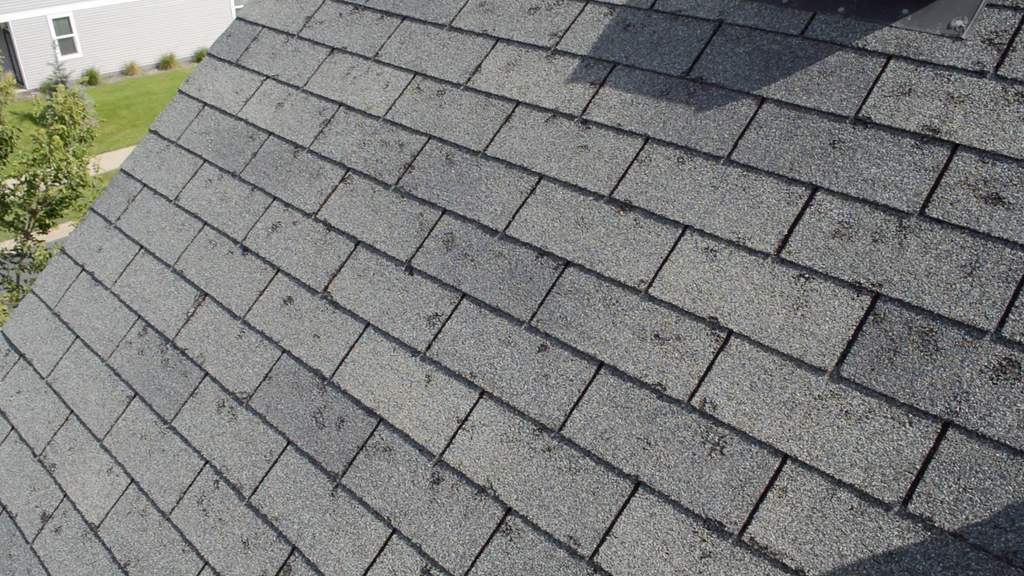
Hail damage on shingles usually appears as dark, round spots where granules have been knocked off, soft, bruised areas, cracks, and, in worse cases, exposed fiberglass mat. These marks scatter randomly across the roof, and that pattern is one of the clearest signs of hail damage.
But from the ground, the damage often looks minor and easy to ignore. A roof that seems fine after a storm can start leaking months later. This guide shows Connecticut and New York homeowners what to look for and how to rule out lookalikes. It also explains when to book a hail damage roof inspection or storm damage restoration services.
Why Hail Damage on Shingles Is Difficult to Identify
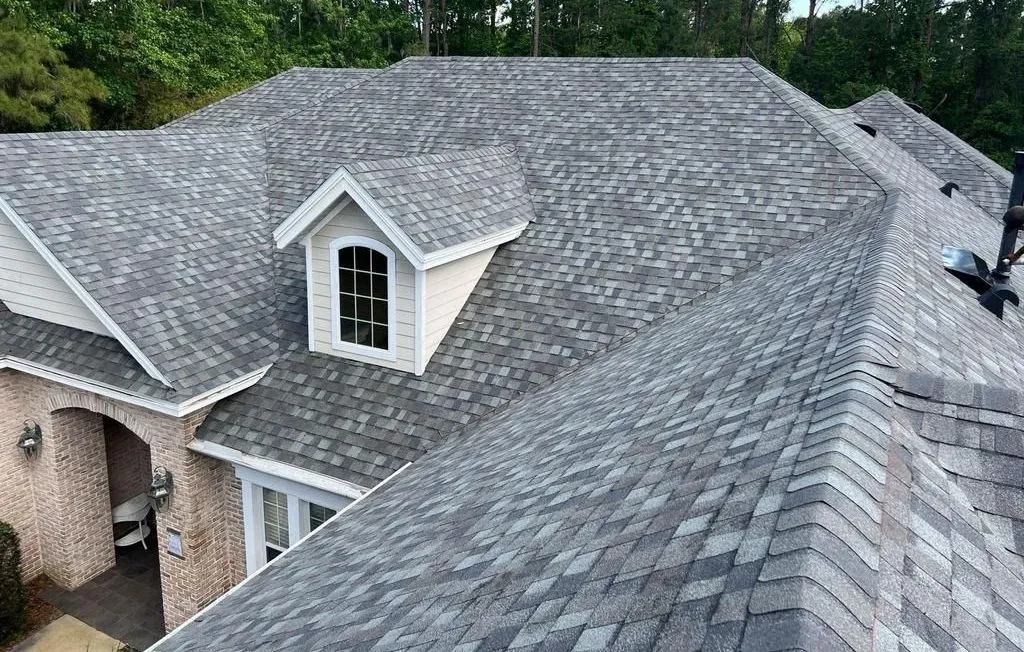
From the driveway, a hail-struck roof can look exactly like a healthy one. Small, coin-sized hail marks blend into the shingle texture, especially on dark shingles. Hail bruising forms inside the shingle, where only a hands-on inspection can find it.
Over time, sun and rain wear down struck spots until they resemble normal aging. That makes insurance claims harder to prove, so book a hail damage roof inspection right away.
The 5 Main Signs of Hail Damage on Shingles
Not every storm leaves the same marks. Hail size, wind direction, roof age, and shingle type all change what you will see. Still, most hail damage on shingles falls into five patterns.
Dark Spots Where Granules Were Knocked Off
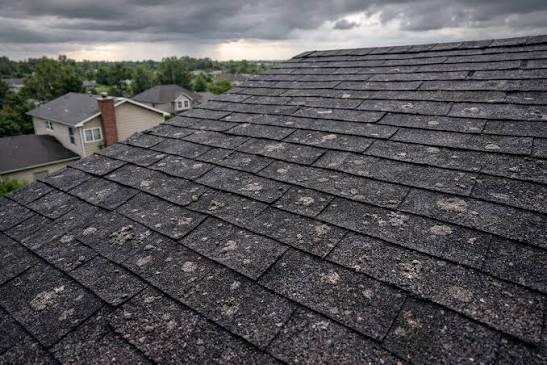
The most common hail impact marks are dark, roughly circular spots where the hailstone knocked protective granules loose and exposed the black asphalt underneath. These spots often look shiny and range from coin-sized to larger. A cluster of them across several roof slopes is a strong sign of hail damage on shingles.
Hail Bruising on Shingles
Hail bruising on shingles is harder to see but often more serious because the impact damages the shingle without breaking its surface. A bruised spot feels soft when a roofer presses on it during an inspection. Over time, hail-bruised shingles lose granules, crack, and eventually let water reach the roof deck.
Granule Loss From Hail
Some granule loss is normal as a roof ages. Granule loss from hail is different because it happens suddenly and in a concentrated way. After a storm, you may notice:
- Piles of granules at the bottom of downspouts
- A sandy layer in gutters that wasn’t there before
- Bald or patchy areas on shingles that look uneven
Cracked or Split Shingles
Larger hail, or hail driven by strong wind, can crack shingles outright. These cracks may be small hairline splits or larger breaks, sometimes in a circular or star-shaped pattern around the impact point. Older shingles that have dried out and become brittle crack more easily.
Cracked shingles let water reach the underlayment and roof deck, which can lead to leaks, rot, and interior damage if they aren’t repaired.
Exposed or Fractured Fiberglass Mat
In severe cases, hail breaks through the granules and asphalt and exposes the fiberglass mat, which may look torn, fuzzy, or fractured. At this point, the shingle can no longer shed water properly. This is one of the most serious signs of hail damage and calls for a prompt hail damage roof inspection.
How Hail Damage Differs on 3-Tab vs. Architectural Shingles
Many buildings in our area have either 3-tab shingles or architectural (dimensional) shingles. Hail affects both, but the damage can look different.
3-tab shingles are thinner and flatter. Impact marks, cracks, and torn edges tend to be easier to see on them. Because they are lighter, they can also be more prone to cracking from larger hail.
Architectural shingles are thicker and have a layered, textured look. That texture can hide bruises, making damage harder to spot from the ground or even in photos. The shingle may look intact while the mat underneath has been compromised.
Hail Damage Lookalikes: Is It Hail or Just an Old Roof?
One of the biggest challenges is telling real hail damage on shingles apart from other problems. Insurance adjusters look closely at this, so it helps to understand the common hail damage lookalikes.
| Issue | What It Looks Like | Pattern |
| Hail damage | Dark spots, bruises, cracks, granule loss | Random, scattered across slopes facing the storm |
| Blistering | Small raised bubbles that pop and leave pits | More uniform, often linked to heat or poor ventilation |
| Normal age wear | Even gradual wear, curling, dried-out shingles | Spread fairly evenly across the roof |
| Foot traffic / mechanical damage | Scuffs, scrapes, or cracks | Lines or clusters near access points, vents, or equipment |
| Algae or staining | Dark streaks | Vertical streaks, usually on shaded, north-facing slopes |
Signs of Hail Damage You Can Check From the Ground
You don’t need to climb onto the roof to look for clues. In fact, you shouldn’t. Wet, damaged, or steep roofs are dangerous, and walking on a damaged roof can make the damage worse. Here’s what you can check safely from ground level:
- Gutters and downspouts: Look for dents, dings, or crushed sections. Soft metals show hail hits clearly.
- Downspout outlets: Check for piles of granules washed off the roof.
- Roof vents and flashing: Dents on metal vents, caps, and flashing are a good sign the roof took hits too.
- HVAC units: Bent or flattened fins on outdoor AC units often point to hail.
- Siding and window screens: Look for chips, cracks, dents, or torn screens.
- Vehicles and outdoor fixtures: Dented cars, damaged patio furniture, or cracked light covers suggest the hail was large enough to affect the roof.
What to Do After You Spot Hail Damage
If you suspect storm damage, acting quickly protects both your building and your insurance claim. Here are the steps we recommend:
- Document everything. Take clear photos of any damage you can see from the ground, including gutters, vents, siding, and granule piles. Note the date and time of the storm.
- Check your insurance policy. Most policies have a time limit for filing hail claims. The deadline varies by insurer and policy, so review yours or call your agent.
- Schedule a professional hail damage roof inspection. Have a qualified roofer inspect the roof before you file. An inspection report gives you a clear record of the damage to share with your insurer.
- Make temporary repairs if needed. If there’s an active leak, protect the interior and arrange temporary covering to prevent further damage. Keep receipts.
- Watch out for storm chasers. After major storms, out-of-town contractors often go door to door offering quick fixes. Work with an established local roofer you can verify.
Why Hail Damage on Shingles Needs a Professional Roof Inspection
A hail damage roof inspection shows what no photo from the yard can. A certified and insured roofer in Connecticut walks every slope, presses on suspect spots, and marks each hit. They also count hits within a roofing square, a 10-by-10-foot test area. Insurance adjusters often use those counts to decide between repair and replacement for each slope.
After the inspection, you should receive a written report with clear photos of each problem area. Don’t wait long to schedule it, because most policies set a deadline for reporting a loss. The longer damage sits, the more it looks like ordinary wear instead of storm damage.
Get Your Roof Checked After the Next Storm
Hail damage on shingles isn’t always obvious, but the warning signs are there if you know where to look: dark impact spots, soft bruises, granule loss, cracks, and dented gutters or vents. When in doubt, don’t climb up and don’t wait.
Xpert Roofing Pro, based in Danbury, CT, helps property managers and building owners across Connecticut and New York find and fix storm damage before it becomes a bigger problem. Contact us to schedule your hail damage roof inspection today.
Frequently Asked Questions
Does hail damage on shingles always cause leaks right away?
No. Hail damage on shingles often takes weeks or months to cause a leak. Bruises and missing granules weaken the shingle slowly, so water problems can show up long after the storm.
Will insurance cover hail damage to my shingles?
Many property insurance policies cover hail damage, but coverage, deductibles, and filing deadlines vary. Check your specific policy or speak with your agent. A documented inspection report can help support your claim.
How soon after a storm should I get a roof inspection?
As soon as you can after a significant hailstorm. An early inspection helps catch hidden damage and keeps you within your insurer’s time limit for claims.