
A heavy snowfall comes and goes, and a few days later a brown stain starts spreading across the bedroom ceiling. Long icicles hang from the gutters like something off a holiday card. When the thaw finally arrives, you are left wondering what the winter has done to your roof.
If any of that sounds familiar, you have likely met an ice dam. Connecticut homeowners deal with ice dam roof problems every winter, and you do not have to sort them out on your own. At Xpert Roofing Pro, we help homeowners find out what is really going on with their roofs and fix it properly.
First, though, it helps to understand what an ice dam is and why it causes so much trouble.
What Is an Ice Dam?
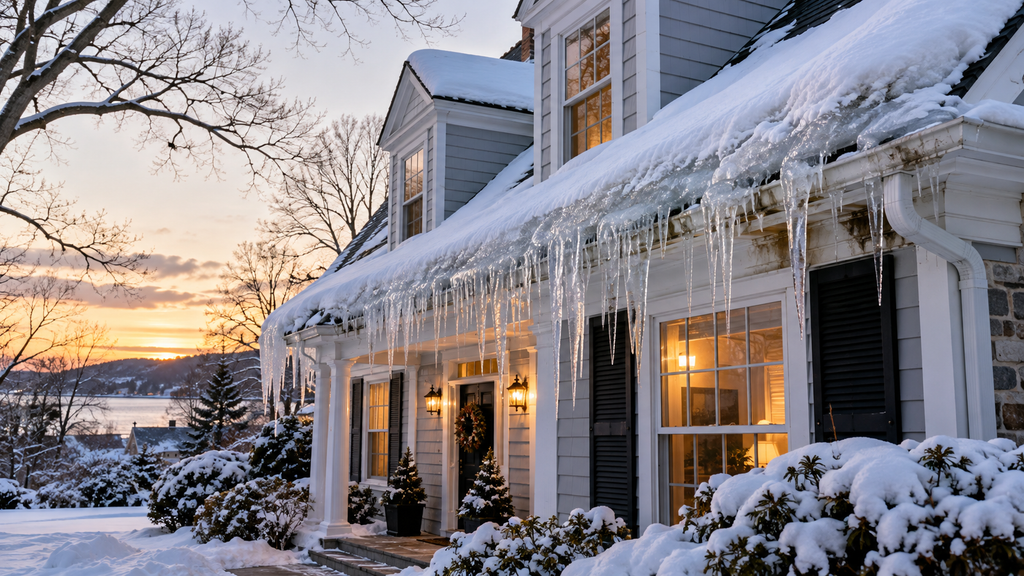
Warm air from inside your home rises into the attic and heats the upper part of the roof. The snow sitting there begins to melt, and the water runs down toward the eaves. The roof edge hangs out past the warm part of the house, so it stays cold, and the water freezes again when it gets there.
Each round of melting and freezing adds to the ridge of ice at the edge. Before long, that ridge is holding back a pool of water with nowhere to go except backward, under your shingles and into your home.
7 Common Ice Dam Roof Problems Cause
1. Roof Leaks and Water Intrusion
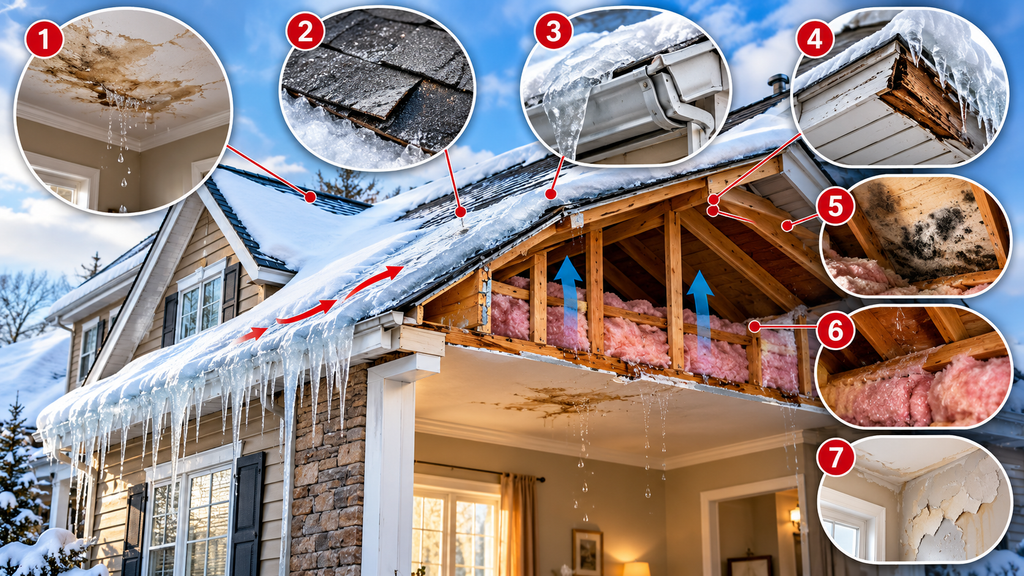
Shingles are designed to shed water running downhill, not water pushed uphill beneath them. When meltwater backs up under the shingles, it seeps through the roof deck and into your home. Look for water stains on ceilings and drips near exterior walls, often well away from where the ice actually sits, and schedule a roof repair at the first sign of a leak.
2. Damaged or Lifted Shingles
Ice expands as it forms and that pressure lifts, cracks and loosens shingles along the roof edge. Repeated freezing also strips away the protective granules on asphalt shingles, which shortens the life of your whole roof.
3. Gutter and Downspout Damage
A gutter packed with solid ice can weigh hundreds of pounds. That load pulls gutters away from the fascia, bends them out of shape and snaps the hangers holding them up. Frozen downspouts also stop draining, so water backs up even further, which is why regular gutter services matter before winter sets in.
4. Fascia and Soffit Rot
The wooden boards along your roof edge stay wet for weeks at a time during an ice dam. Over time, that moisture rots the fascia and soffits. Once the wood breaks down, it gives insects, squirrels and other pests an easy way into your attic.
5. Attic Moisture, Mold and Mildew
When water makes it into the attic, it soaks the framing and roof decking. In a closed, poorly ventilated space, mold and mildew follow quickly. A musty smell in the attic or upstairs rooms is often the first sign, and mold can affect your family’s health as well as your home.
6. Wet Insulation and Higher Energy Bills
Insulation that gets wet loses much of its ability to hold heat in. More heat escapes into the attic, which melts more snow, which creates more ice dams. It is a cycle that keeps feeding itself, and you pay for it through higher heating bills all winter.
7. Interior Damage to Ceilings, Walls and Paint
The damage you can see inside is usually the last stage. Peeling paint, sagging or bubbling drywall, and warped window frames mean water has been getting in for a while. These interior repairs often cost more than fixing the roof problem that caused them.
What makes ice dams so costly is that the damage often goes unnoticed until it is well advanced. A small stain on the ceiling can be hiding a much bigger problem above it.
Warning Signs You Have an Ice Dam Roof Problem
Keep an eye out for these signs during and after a winter storm:
- A thick band of ice along the eaves
- Large icicles hanging from your gutters
- Water stains, frost, or damp spots in the attic
- Snow melting unevenly on the roof, with bare patches up high and snow piled at the edges
- New stains on ceilings or upper walls after a thaw
If you notice any of these, it is worth having your roof checked sooner rather than later.
How to Prevent Ice Dam on Your Roof Problem in Connecticut
The good news is that ice dams are largely preventable. The goal is to keep your roof cold and your heat inside the house where it belongs.
- Air-seal and insulate the attic. Sealing gaps around lights, pipes, ducts and hatches, then adding insulation, keeps warm air from reaching the roof. The U.S. Department of Energy’s air sealing guide is a helpful place to start.
- Improve roof ventilation. A balanced system of soffit and ridge vents keeps the whole roof at a more even temperature.
- Install ice and water shield. This waterproof membrane goes under the shingles along the eaves and stops backed-up water from getting through. Building codes in our region call for it, so make sure it is included in any roof replacement.
- Rake the roof after heavy snow. A roof rake used from the ground can pull snow off the lower few feet of the roof before it has a chance to freeze.
- Clean your gutters before winter. Clear gutters and downspouts give meltwater a path off the roof.
One word of caution: never chip at ice dams with a hammer or shovel, and do not spread rock salt on your roof. Both can damage your shingles more than the ice itself.
Why Connecticut Homes Are So Prone to Ice Dams
Connecticut winters bring everything ice dams need: steady snowfall, deep cold, and frequent swings above and below freezing. Homeowners in Danbury, Bethel, Brookfield, New Milford, Ridgefield, and Fairfield County see the same pattern year after year.
Older homes face the greatest risk. Many Connecticut houses were built with insulation and ventilation that cannot keep up with today’s winters, so warm air leaks into the attic and keeps the melt-and-freeze cycle going.
Protect Your Connecticut Home Before Winter Hits
Ice dams are a fact of life in Connecticut, but the damage they cause does not have to be. A little attention before the snow arrives can save you from leaks, rot, and costly interior repairs coming spring.
The team at Xpert Roofing Pro can inspect your roof, find what is causing your ice dams, and recommend a fix that lasts. As a member of the GAF President’s Club, we install roofing systems backed by the GAF Golden Pledge warranty of up to 50 years. We are a family-owned business and offer free estimates so you can see all your options before making a decision. If you need a roof repair or replacement, 0% financing is available with a simple pre-qualification.
Do not wait for the next thaw to turn a small problem into a major repair. Contact Xpert Roofing Pro today at 475-750-0330 to schedule your pre-winter roof inspection.