
Did a nor’easter or a strong thunderstorm just hit your area? Is your roof leaking or missing shingles? Storm damage is a common problem for homeowners in Danbury and across Connecticut. High winds, hail, heavy rain, and falling branches can damage a roof in minutes. Sometimes the damage is easy to see. Other times it stays hidden until water starts dripping through the ceiling.
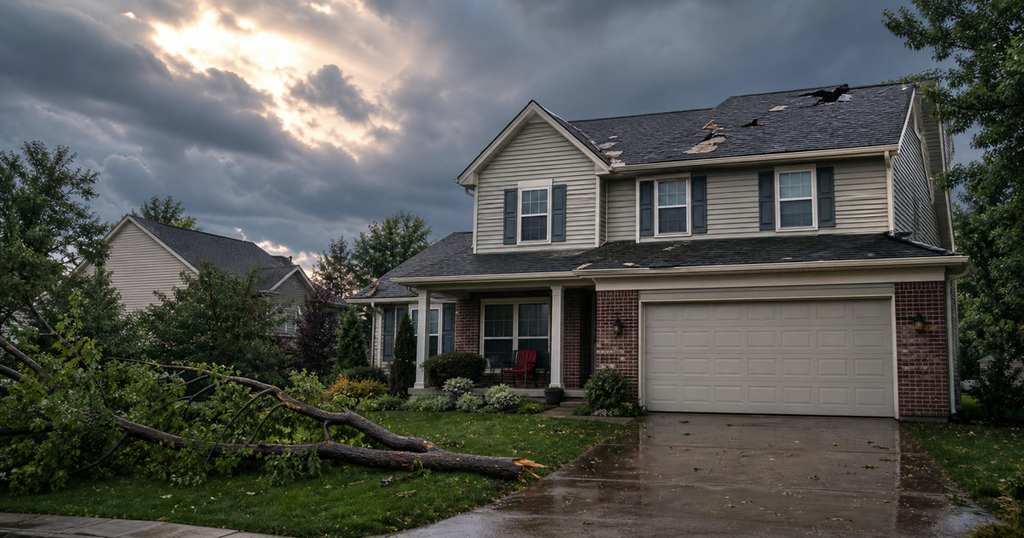
Fortunately, you can limit the damage and the repair cost if you act quickly and in the right order. In this guide, we’ll explain what to do after storm damage to your roof, how to file an insurance claim, and how to get reliable storm damage roof repair in Connecticut.
Why Do Storms Damage Roofs in Connecticut?
Knowing how storms damage a roof makes it much easier to spot the problem and choose the right repair. Connecticut sees a mix of nor’easters, summer thunderstorms, tropical storm remnants, and heavy winter snow. Each of these puts a different kind of stress on your roof. Below are the most common causes of storm damage:
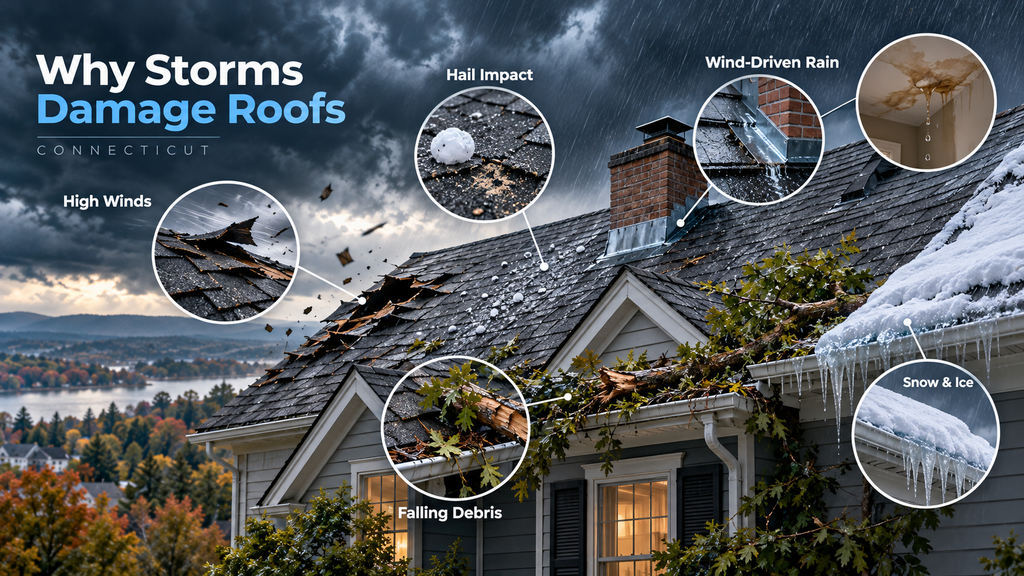
- High Winds: Strong gusts get under the edges of shingles and lift them. Once the seal breaks, shingles crease, tear, or blow off completely and expose the underlayment.
- Hail Impact: Hailstones knock granules off asphalt shingles and leave bruises or cracks. This weakens the shingle and shortens the life of your roof, even if it does not leak right away.
- Falling Trees and Debris: Branches and whole trees can puncture the roof deck. Even small limbs can scrape shingles and clog gutters during a storm.
- Heavy Rain and Wind-Driven Water: Rain pushed sideways by wind can find its way under flashing around chimneys, vents, and skylights. This leads to leaks inside the attic and ceiling.
- Snow and Ice Load: Heavy snow adds weight to the roof structure, while ice dams trap melting water at the roof edge. Both can cause leaks and, in severe cases, sagging.
Storm Damage Roof Repair in Connecticut: 8 Steps to Follow After a Storm
Now that you understand how storms damage a roof, let us go through the steps you should follow once the storm has passed:
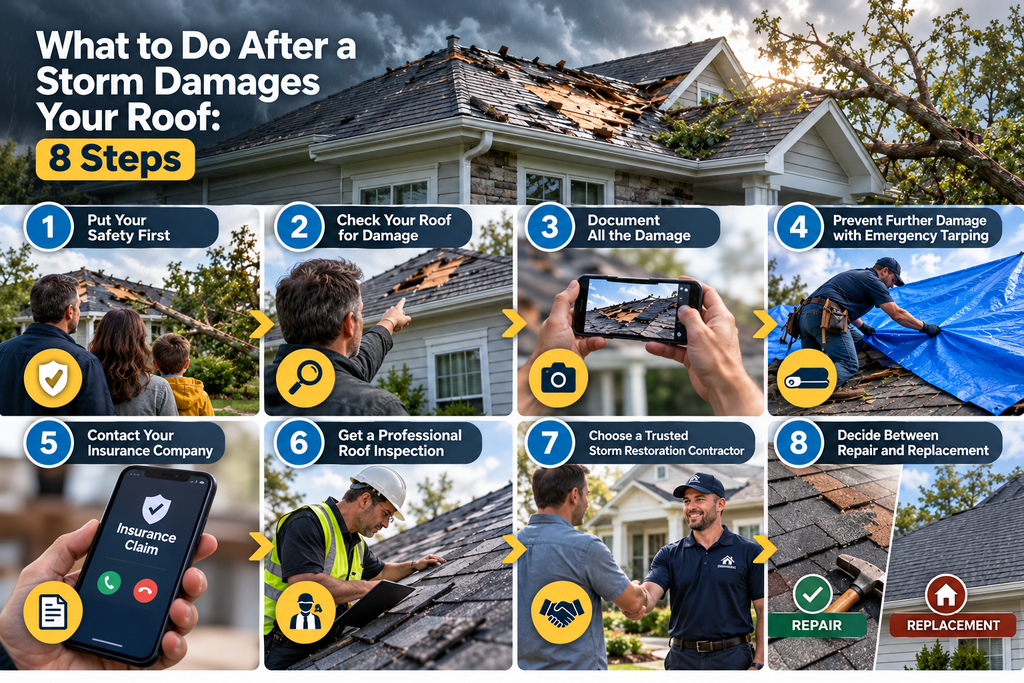
1. Put Your Safety First
Your safety and your family’s safety come before any repair. A storm-damaged roof can be wet, slippery, and structurally weak, so never climb onto it yourself. Look around your property for downed power lines and stay well away from them. Inside the house, watch for sagging ceilings, active leaks, and water dripping near light fixtures or outlets.
Can you stay in your house with a damaged roof? In most cases, yes, if the damage is limited to a few missing shingles or a small leak. However, you should leave and find a safe place to stay if a tree has broken through the roof, the ceiling is sagging, or water is reaching your electrical system.
2. Check Your Roof for Storm Damage from the Ground
Once it is safe, the next step is to understand how much damage your roof has taken. You don’t need a ladder for this. A careful look from the ground and from inside your attic can reveal most of the warning signs. Keep in mind that some storm damage, such as hail bruises or broken shingle seals, cannot be seen from the ground.
3. Document All the Damage
Clear records are the foundation of a successful insurance claim. Insurance adjusters need proof of what the storm did to your home, and photos taken right after the storm are the strongest evidence you can have. Documenting everything before you clean up also protects you if the insurance company questions the cause or the extent of the damage.
4. Prevent Further Damage with Emergency Roof Tarping
A small opening in your roof can let in a lot of water during the next rainfall. This water soaks insulation, stains ceilings, and can lead to mold and wood rot within days. Most homeowners insurance policies also expect you to take reasonable steps to prevent further damage. If you don’t, the insurer may refuse to pay for damage that happened after the storm.
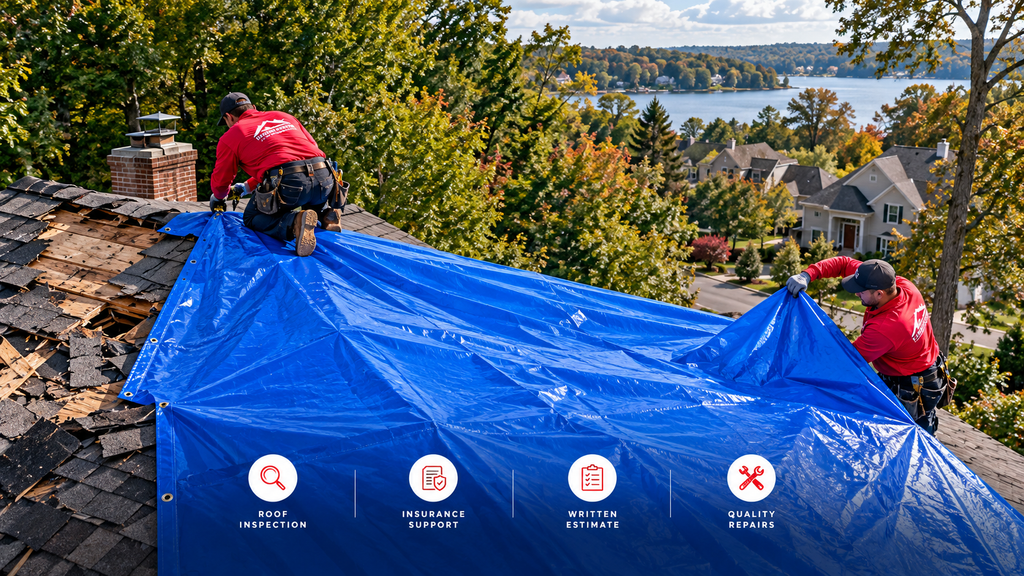
Emergency roof tarping is the fastest way to protect your home until permanent repairs are done. A professional crew secures a heavy-duty tarp over the damaged area, so rain and snow cannot get in.
5. Contact Your Insurance Company
Reporting the damage early keeps your claim on track. Most policies require you to notify the insurer “promptly” after a loss, and waiting too long can make the claim harder to approve. Filing early also gets you into the adjuster’s schedule sooner, which matters after a major storm when many homes in the area are damaged.

Call your insurance company or file the claim through its app or website. Have your policy number, the date of the storm, your photos, and a short description of the damage ready. Ask the insurer about your deductible, the deadline for filing, and when an adjuster will visit.
Does homeowners insurance cover storm damage in Connecticut?
Most standard homeowners policies in Connecticut cover sudden damage from wind, hail, and falling trees. However, they usually do not cover damage caused by poor maintenance or an old, worn-out roof. Many Connecticut policies also carry a separate hurricane or windstorm deductible. Read your policy carefully or ask your agent what applies to you.
Should you call your insurer or a roofer first?
Call a roofer first if you need emergency tarping to stop active leaks. Then contact your insurance company. A roofer’s inspection report can also help you understand the damage before you speak to the adjuster.
6. Get a Professional Roof Inspection
A professional roof inspection shows you the full picture of the damage, including problems you cannot see from the ground. A roofer checks the shingles, flashing, roof deck, vents, gutters, and attic for both visible and hidden damage. The written inspection report also gives you solid evidence to support your insurance claim.
7. Choose a Trusted Storm Restoration Contractor
After a big storm, many out-of-town crews show up in the area looking for quick work. These are often called “storm chasers.” Some do poor-quality repairs, and others take a deposit and never come back. Choosing the right storm restoration contractor protects both your home and your money.
If you are looking for a storm restoration contractor you can trust, Xpert Roofing Pro is a strong choice for homeowners in Danbury and nearby Connecticut towns. We are a local roofing company, not a crew that leaves town when storm season ends. So you always know where to find us, during the repair and long after it is finished.
When you choose Xpert Roofing Pro, we take care of the whole storm restoration process for you:
- Thorough Roof Inspection: We inspect your roof, take clear photos of the damage, and explain whether a repair or a full replacement makes sense.
- Insurance Claim Support: We prepare a detailed written report and can meet your insurance adjuster on site so no damage is missed.
- Clear Written Estimate: You get an honest price in writing, with no pressure and no large cash deposit up front.
- Quality Repairs: Our team uses quality roofing materials and backs the work with a written warranty.
8. Decide Between Roof Repair and Replacement
Not every storm-damaged roof needs to be replaced. The right choice depends on how much of the roof is damaged, how old it is, and whether the roof deck underneath is still solid. The table below makes the decision easier:
| Situation | Best Option | Why |
| A few missing or lifted shingles | Repair | The damage is limited, and the rest of the roof is in good shape |
| Small leak around flashing or a vent | Repair | Resealing or replacing the flashing usually solves the problem |
| Hail damage across most roof slopes | Replacement | Damaged shingles lose protection across the whole roof |
| Roof is older than 15–20 years | Replacement | An older roof is likely to fail again in the next storm |
| Damaged or rotted roof deck | Replacement | The structure under the shingles has to be rebuilt |
How to Prepare Your Roof for the Next Connecticut Storm
Beyond repairing the current damage, a little preparation can reduce the damage from the next storm. Most storm damage gets worse because of small problems that were already there, such as loose shingles, clogged gutters, or overhanging branches. Fixing these before storm season keeps your roof stronger and your repair bills lower.
- Schedule a Fall Roof Inspection: A yearly roof inspection before winter catches loose shingles, cracked flashing, and weak spots early.
- Trim Overhanging Trees: Cut back branches that hang over your roof so they cannot fall on it or scrape shingles in high winds.
- Clean Your Gutters: Clear gutters and downspouts so they drain water away quickly and help prevent ice dams in winter.
- Check Your Attic Ventilation and Insulation: Good airflow keeps the roof deck cold and stops snow from melting and refreezing at the edges.
- Review Your Insurance Policy: Know your deductible and what your policy covers before the next storm arrives.
Conclusion
To wrap it up, storm damage to your roof can come from high winds, hail, falling trees, heavy rain, or snow. Following the steps above in order keeps your family safe, protects your home from further damage, and strengthens your insurance claim. The key is to act quickly, document everything, and work with a trusted local contractor. For reliable storm damage roof repair in Connecticut, contact Xpert Roofing Pro today for a roof inspection in Danbury, CT.